
My friend Caio is the person I have spoken the most Portuguese with in my life. He is Brazilian and I am Galician, and this relationship took shape while we were living in Stockholm. In that context of displacement, I began to discover bridges between my language and his, to reflect on the political and social processes that had led them to become normalized with different spellings and sounds. Since Galician and Portuguese are so close, we understood each other speaking in our own ways. But little by little I began to pay attention to the words and sounds I didn’t recognize, repeating them in order to imitate them. There was a mutual adaptation: I tried to sound more Portuguese, with the mistakes of someone who has never studied the language, and he, who also knew Spanish, modified words and expressions so I could understand him.
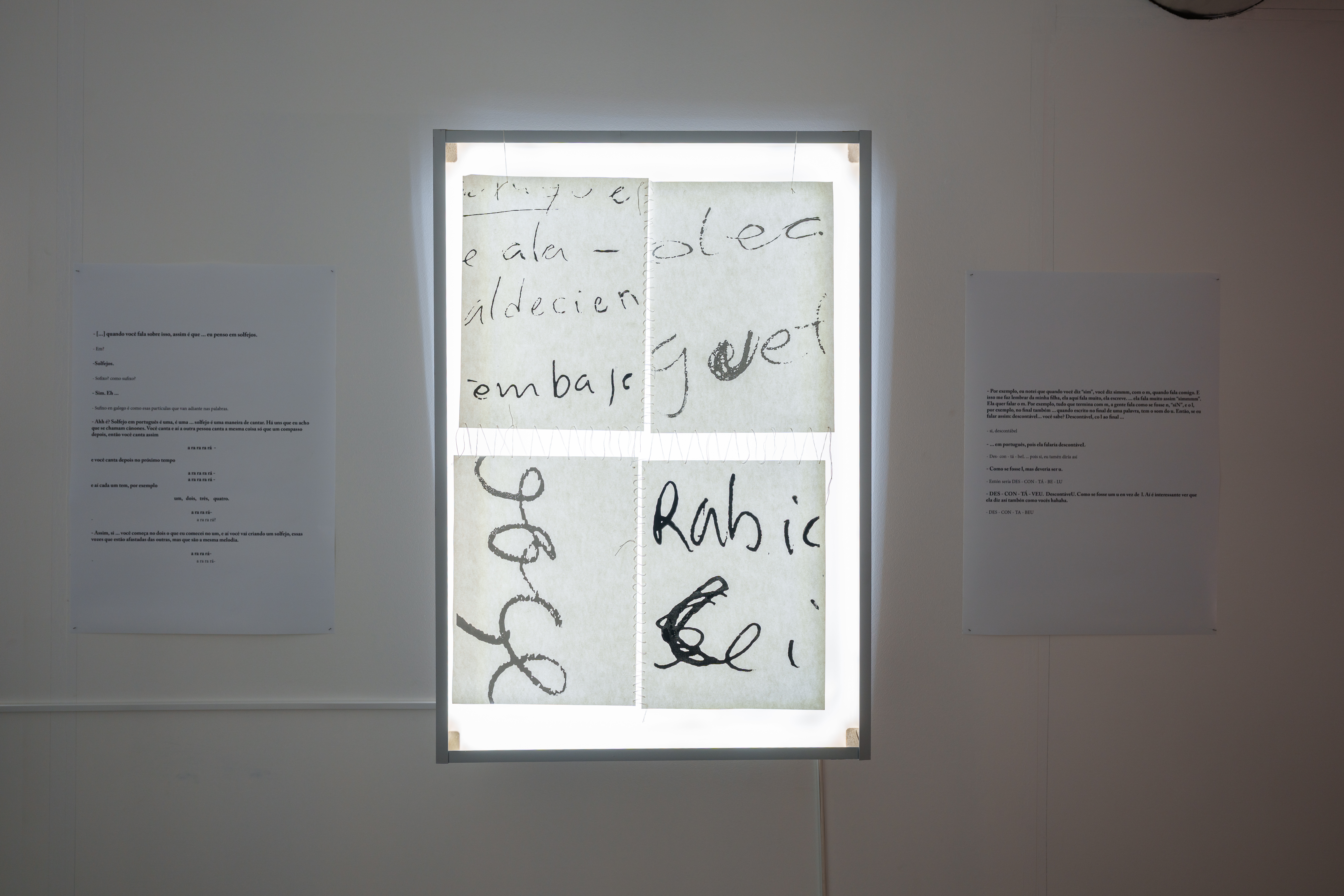
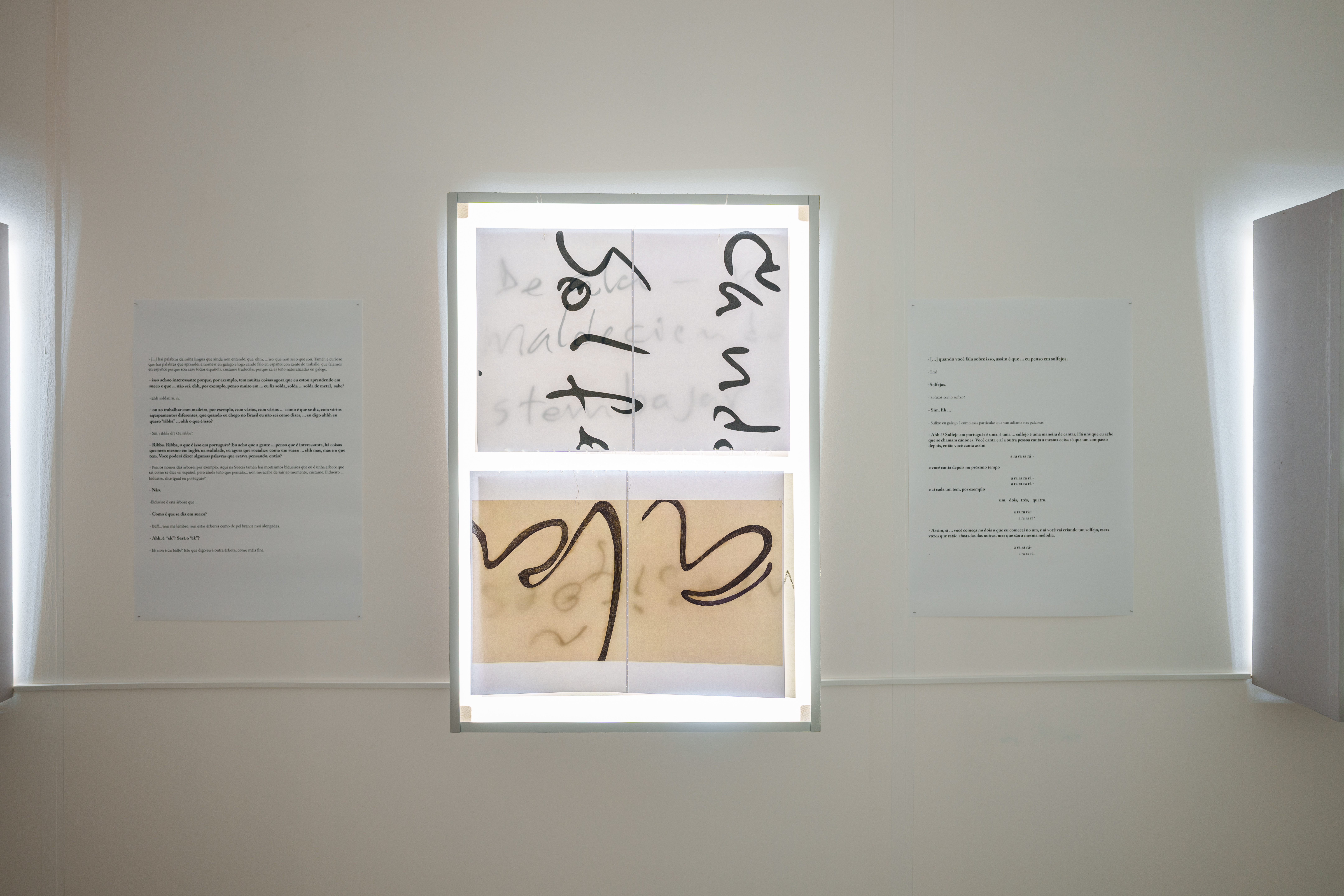
For the exhibition Transbordo, at the Fundação Bienal de Cerveira, I proposed that we have a conversation in which, every time one of us used a word the other did not understand, the other would write it down. That’s how two handwritten lists appeared, full of mistakes, different handwritings, and transformed sounds.
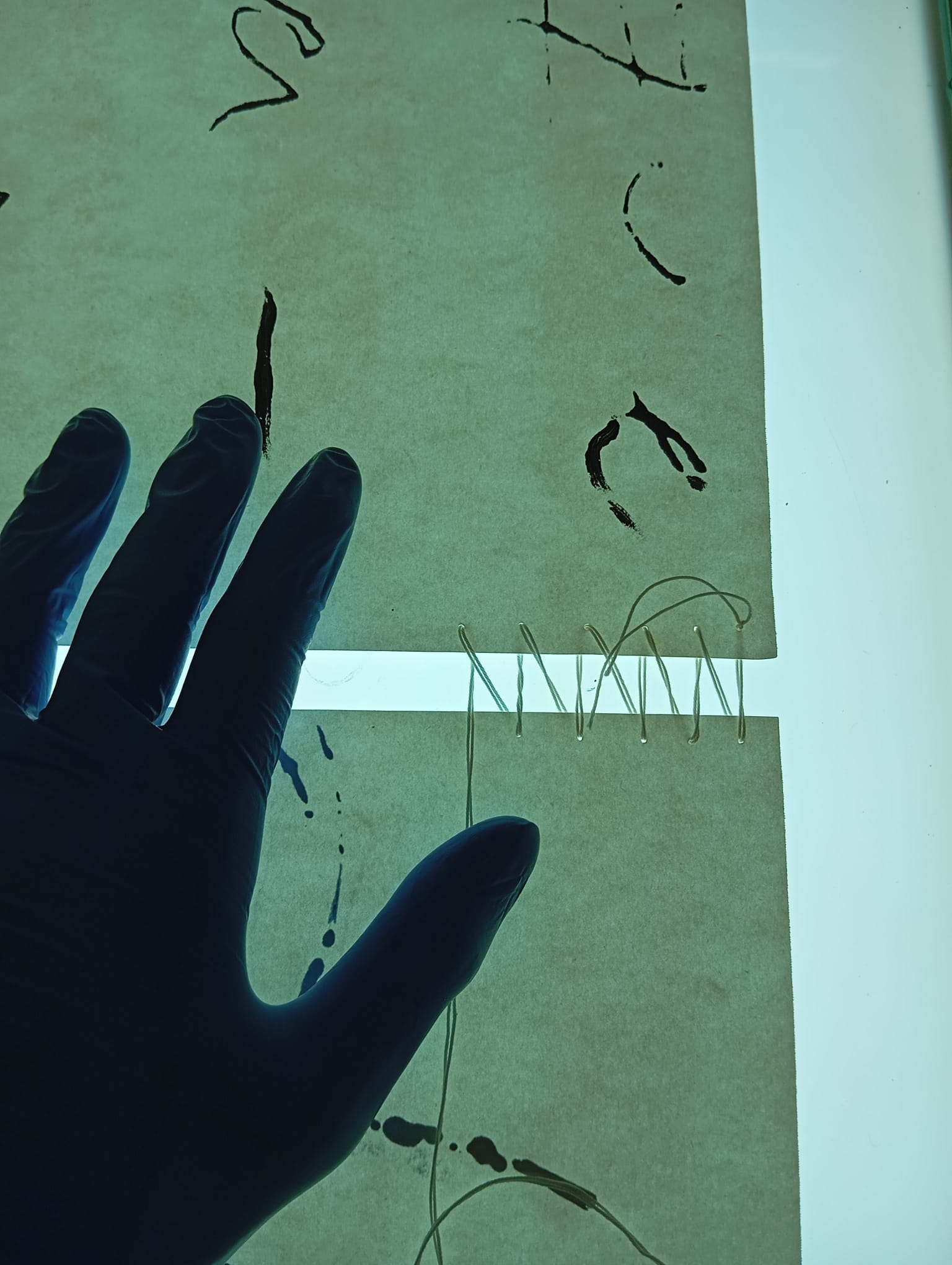
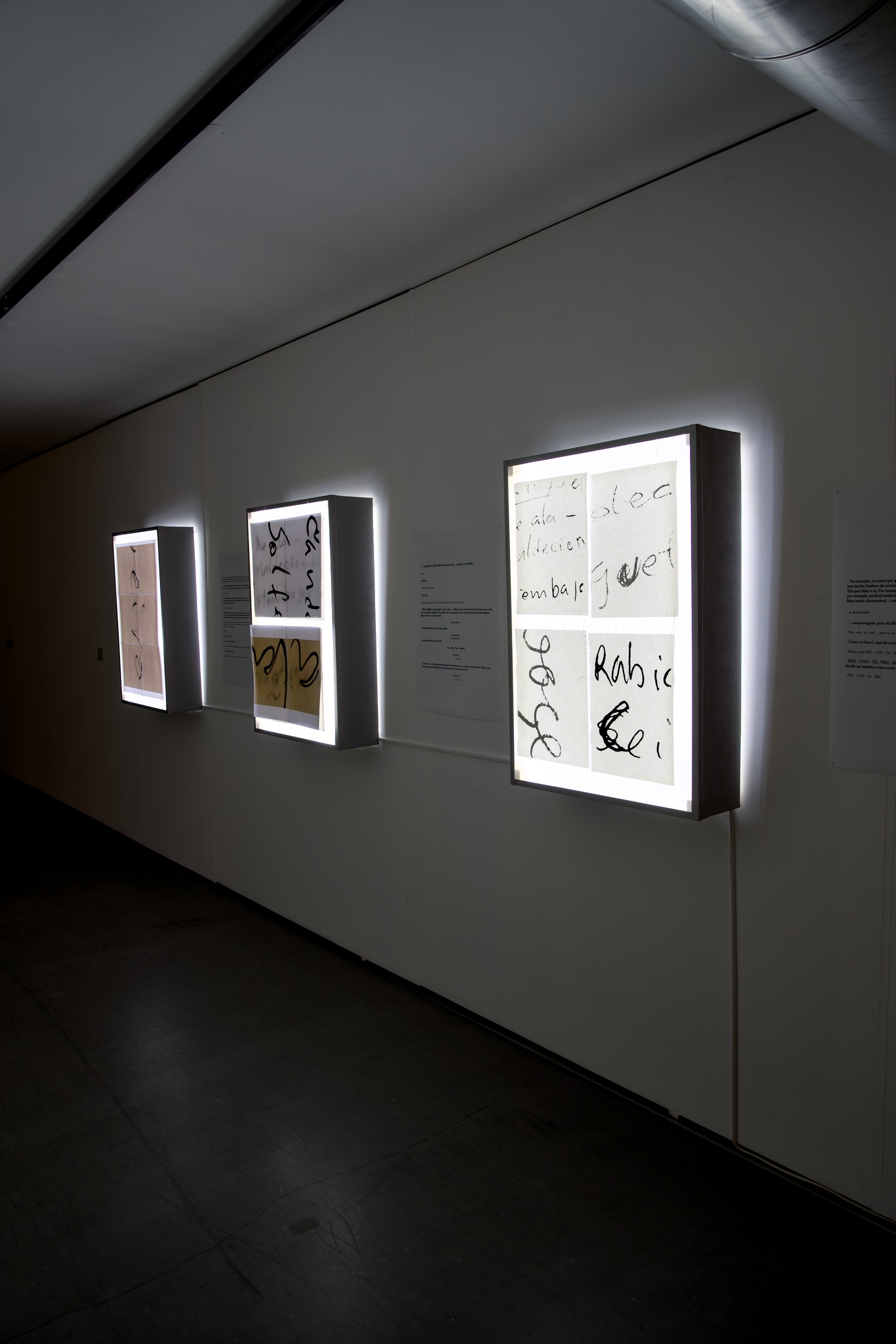
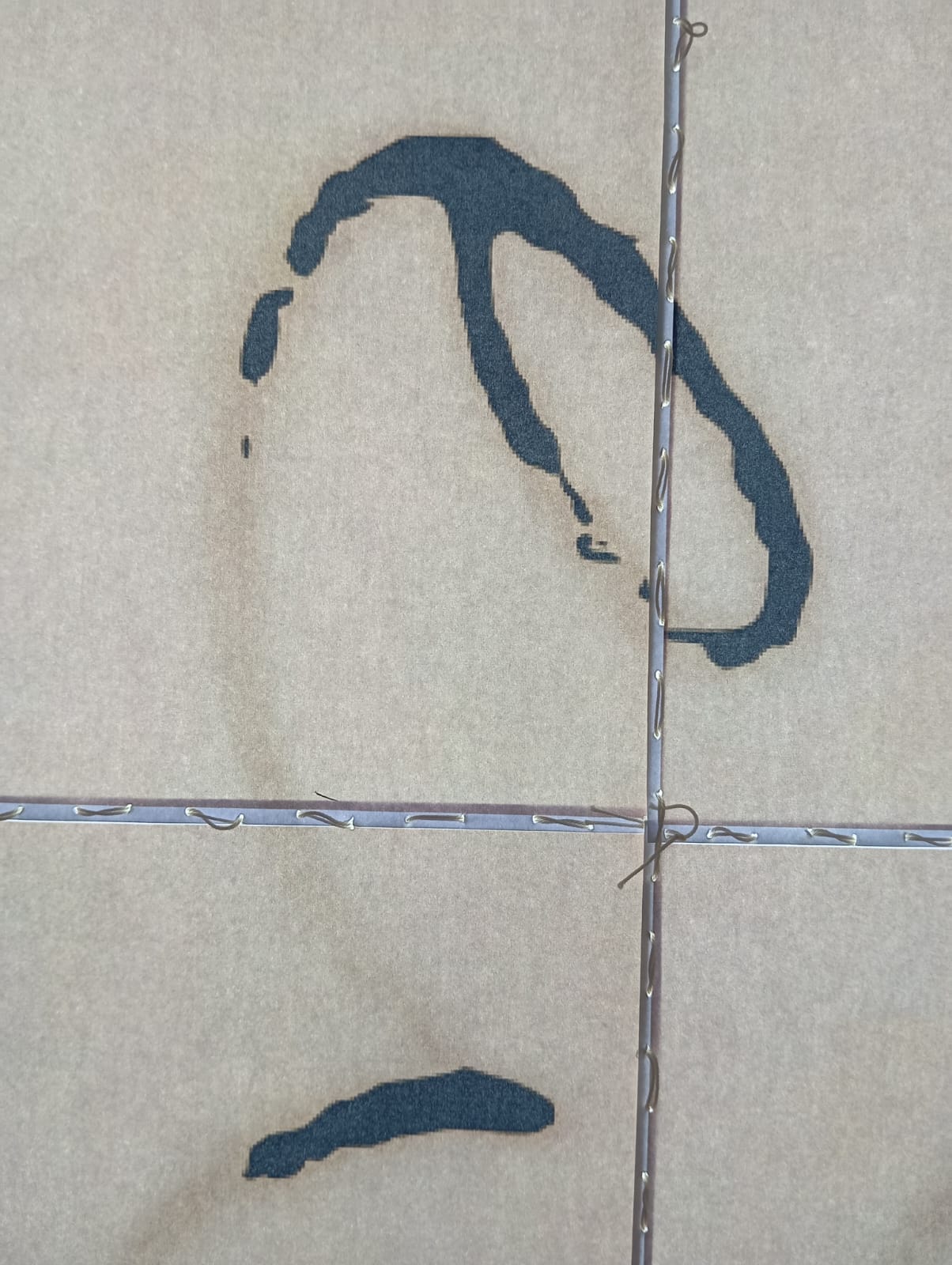
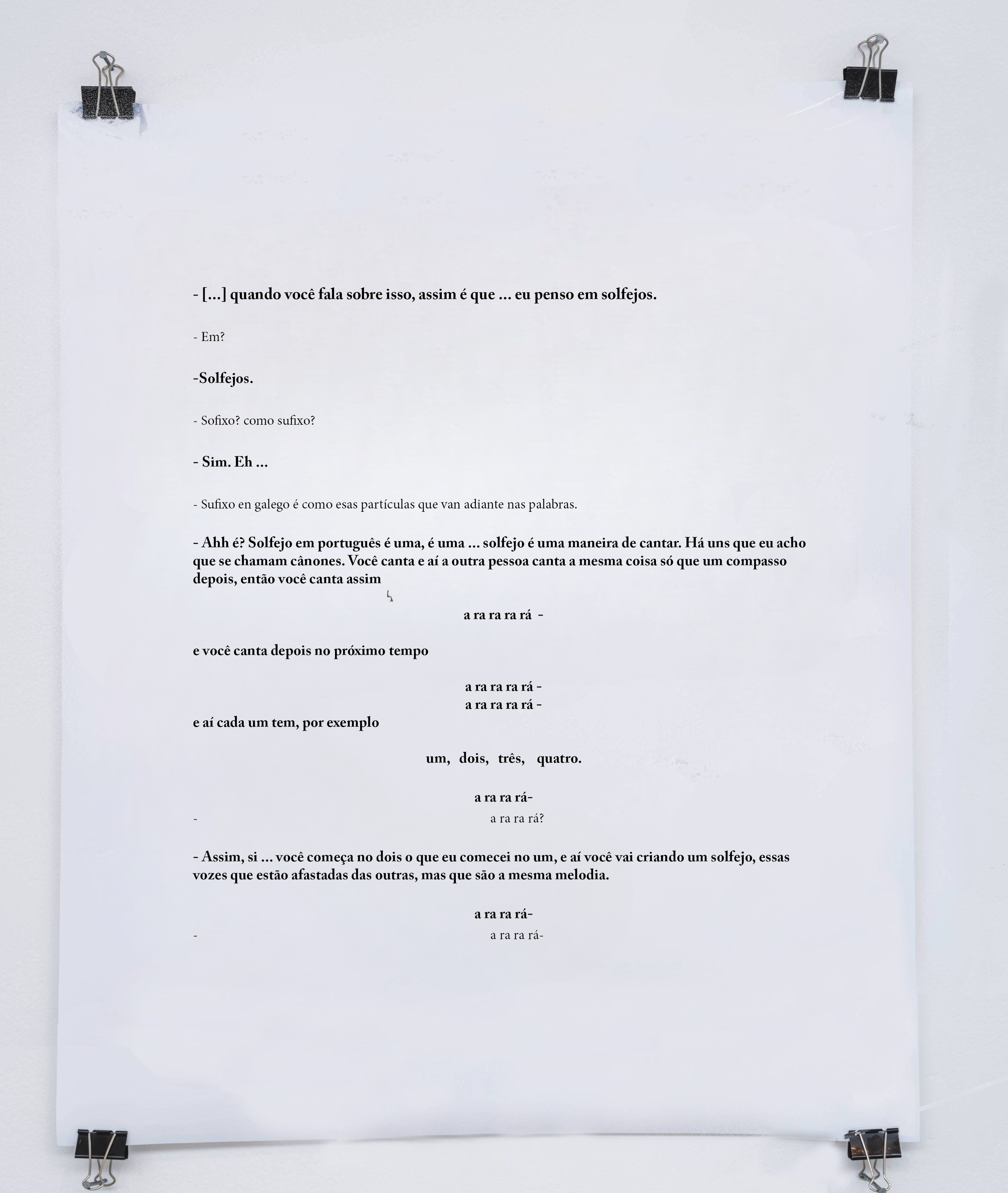
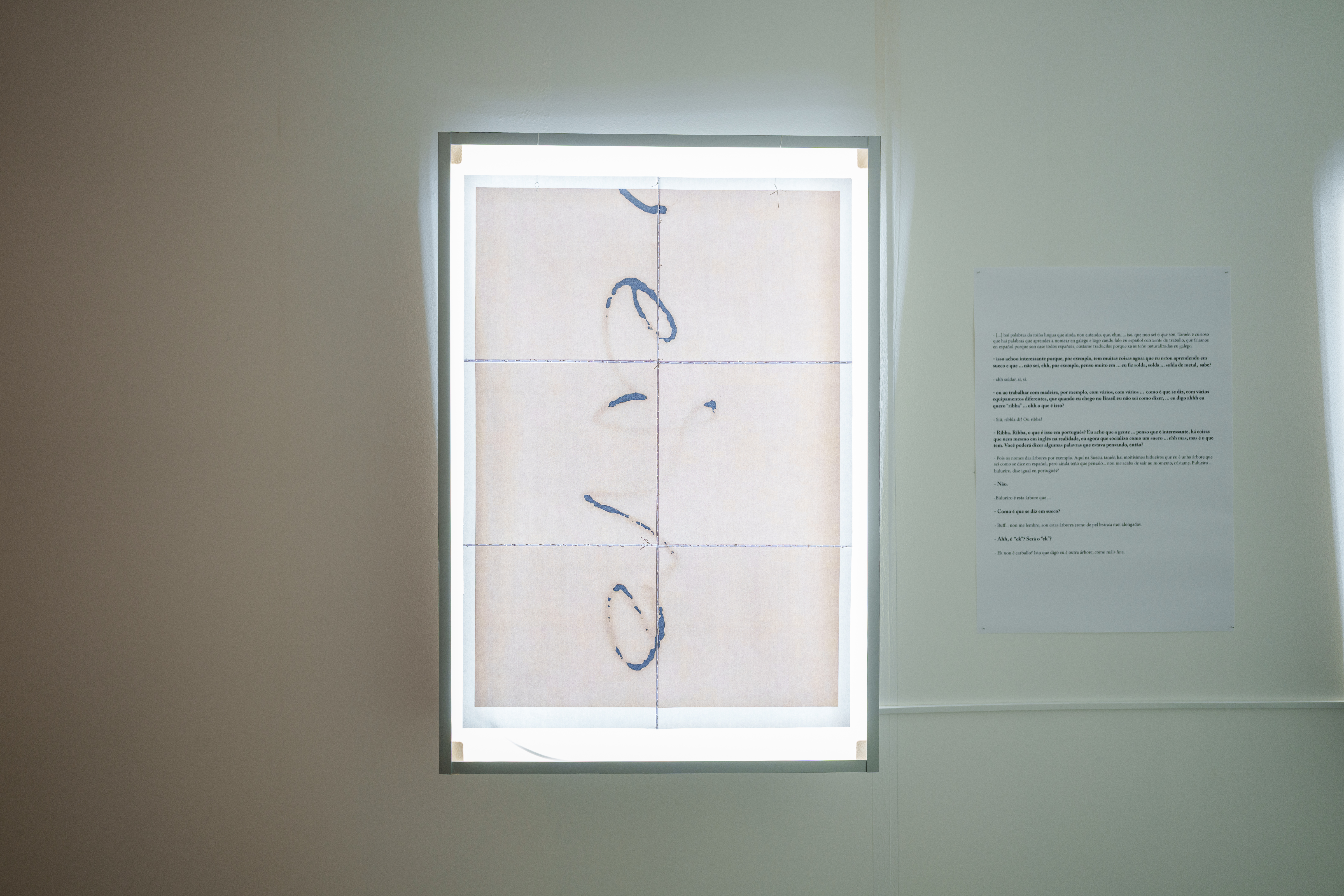
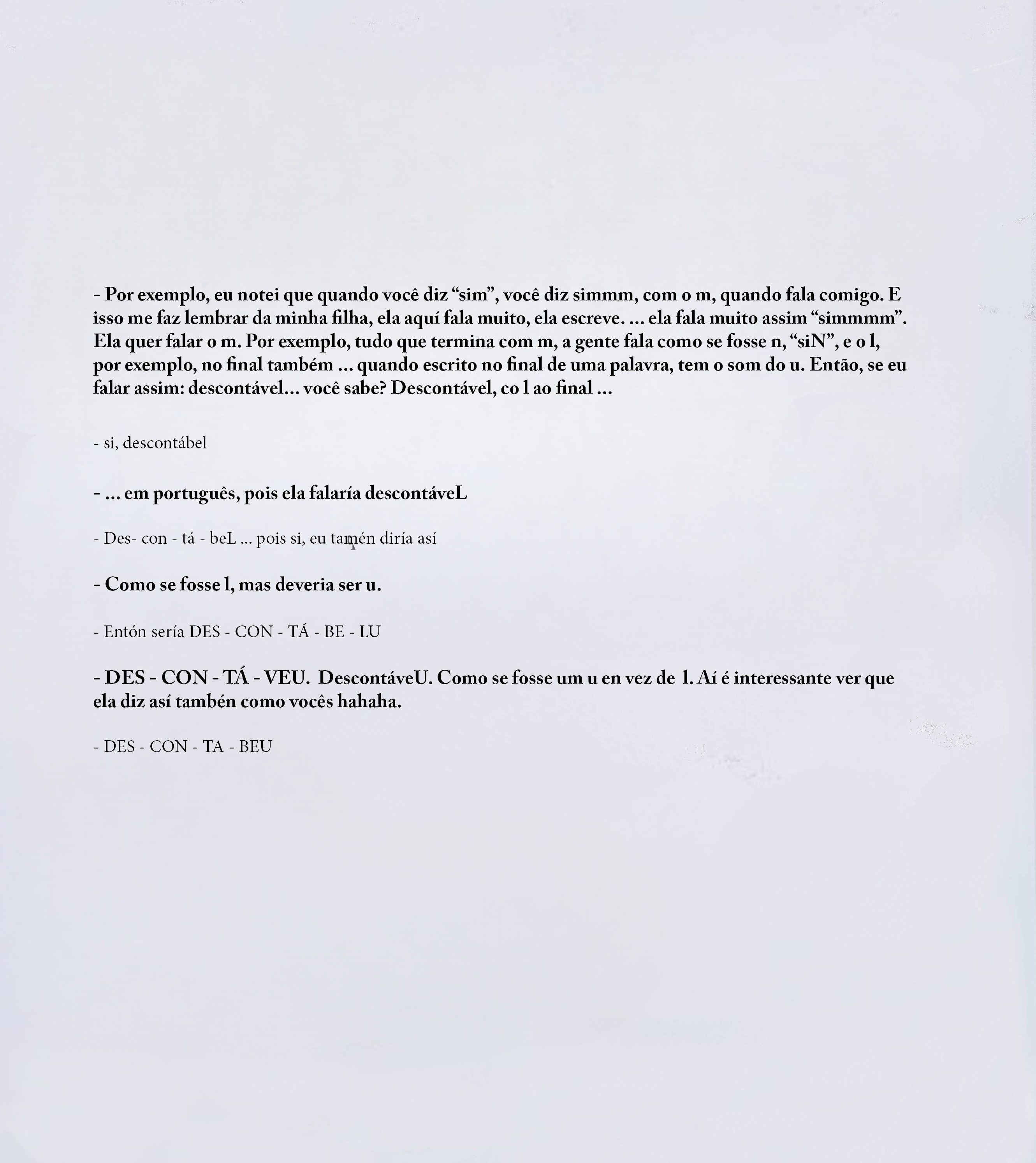
The piece is composed of three parts. Each one includes, on one side, transcriptions of fragments of the conversation printed on photographic paper, following Galician and Portuguese spelling norms, stretching the relation between the two languages. On the other side, it shows compositions made with the words we both wrote by hand, even taken into screen printing, playing with legibility and materiality.
The process includes untranslatable sounds: interjections, pauses, mistakes, songs, that liminal zone between music and language. I am not interested in separating Galician from Portuguese, but in showing languages as living, mutating bodies.
 Breogán Xague